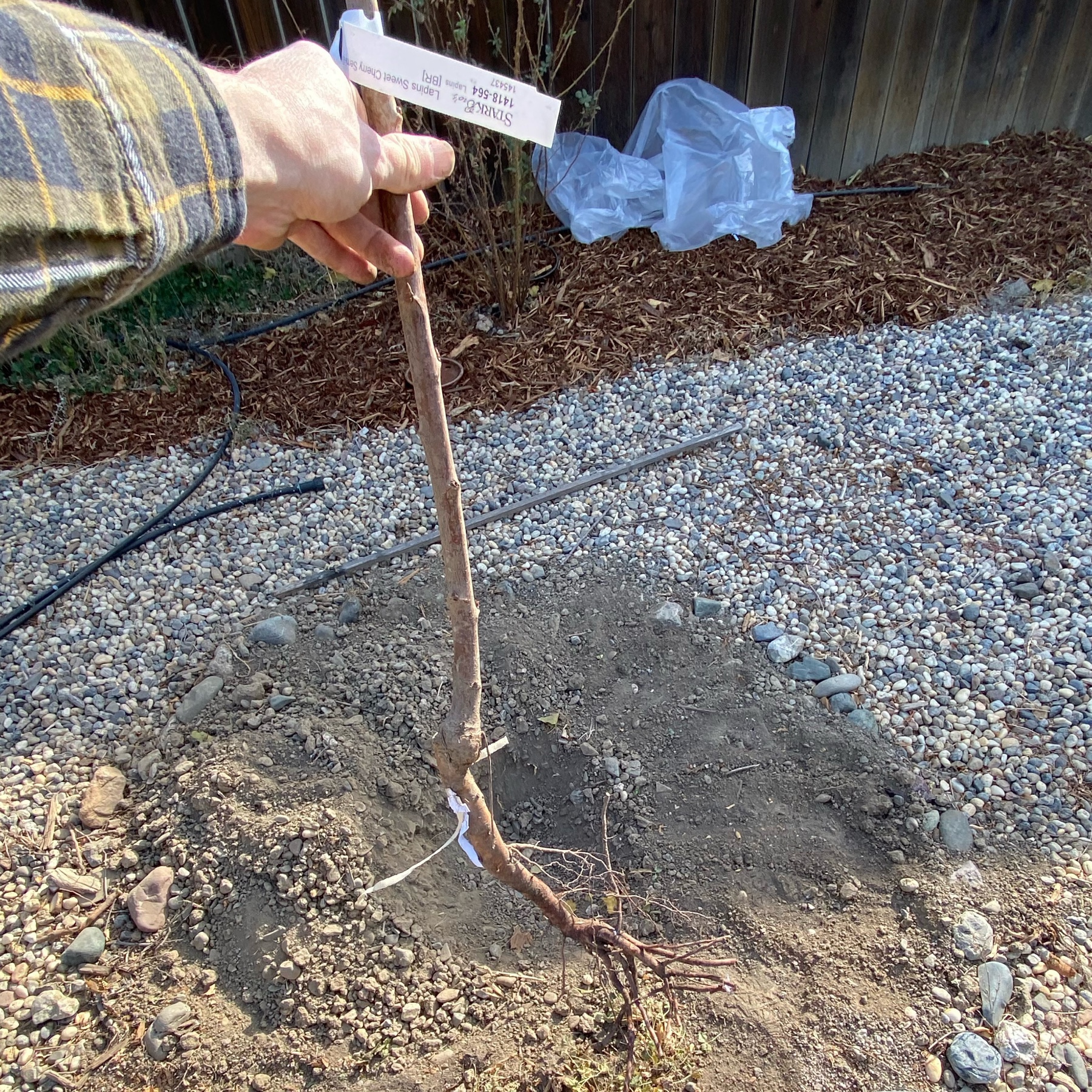
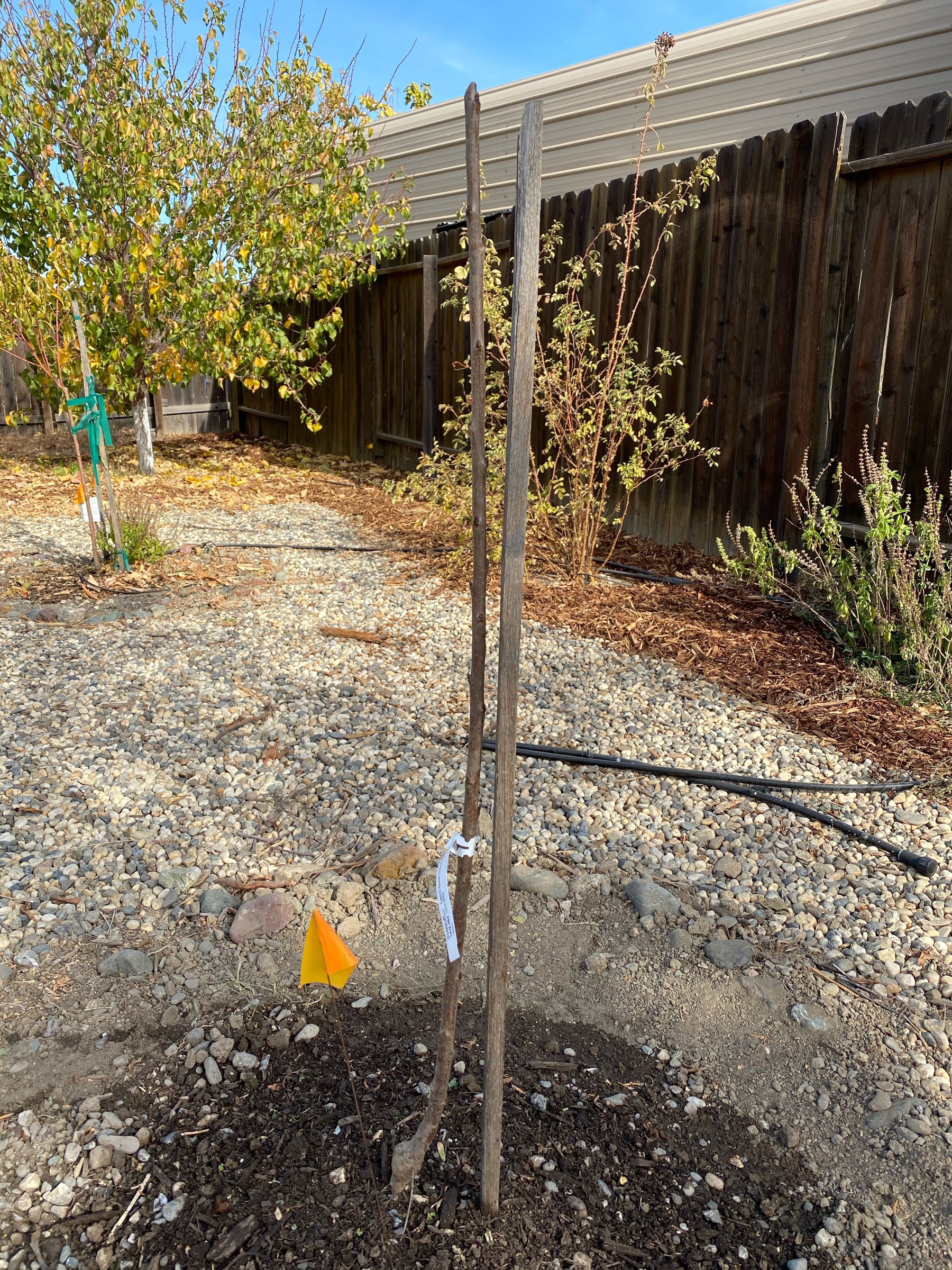
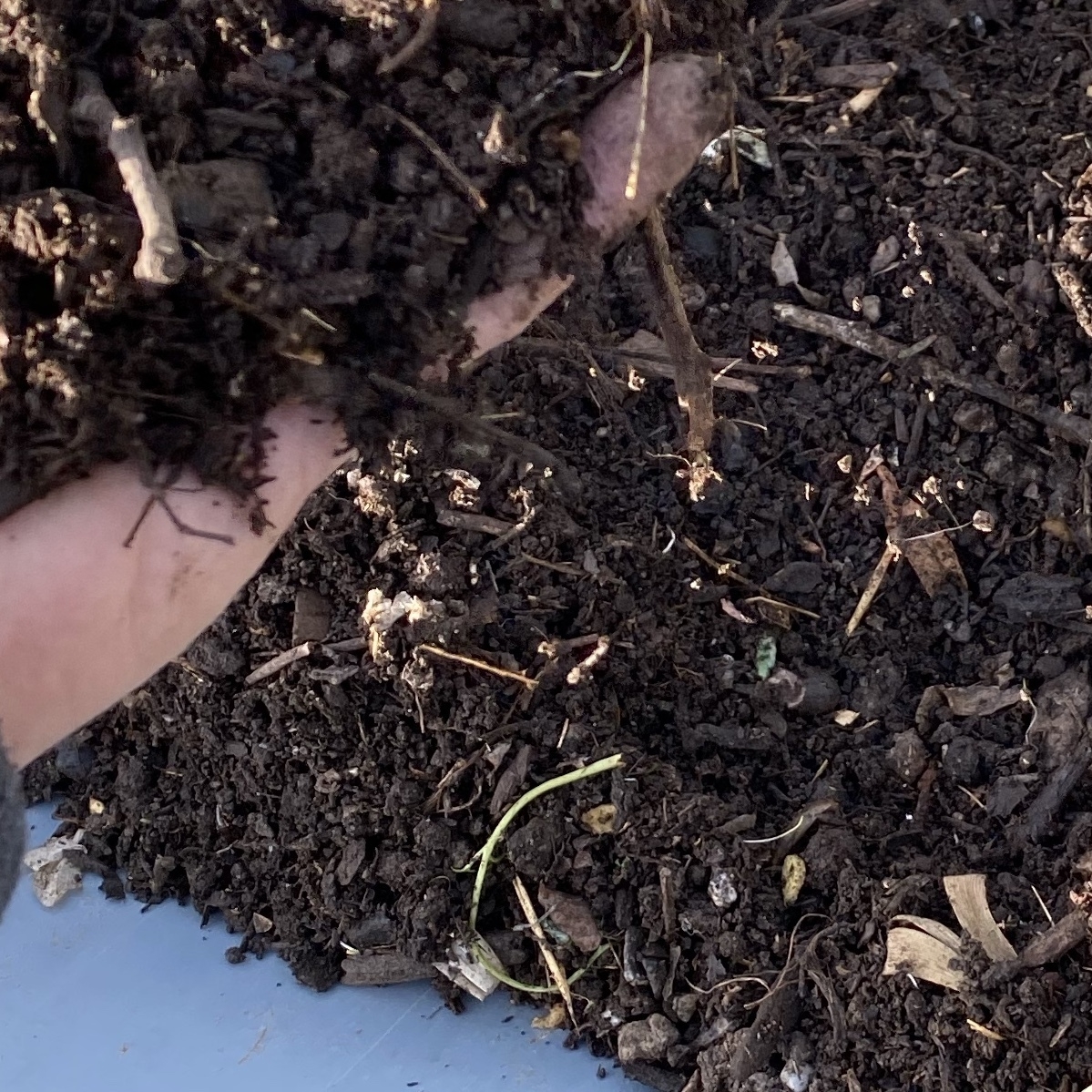
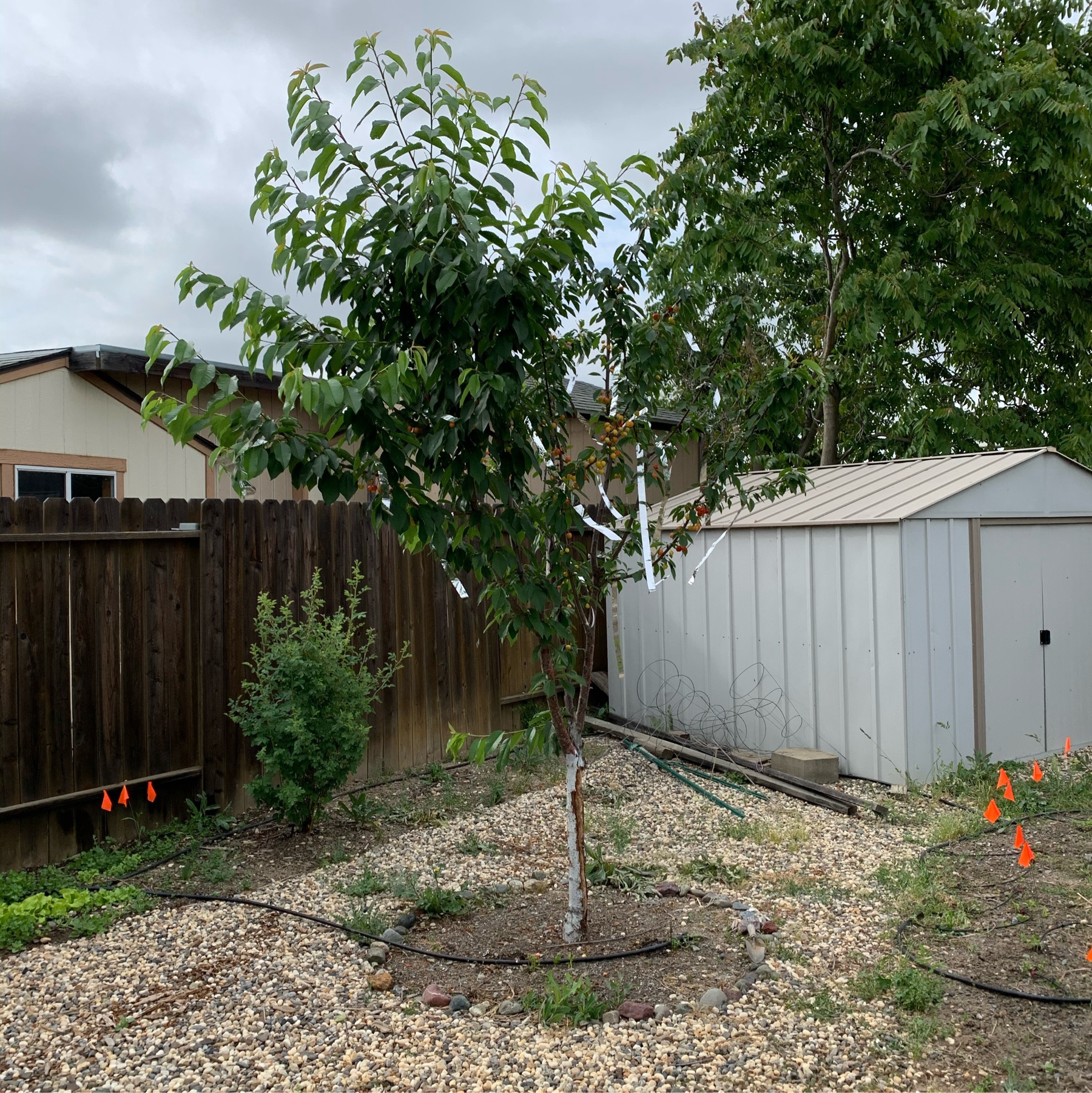
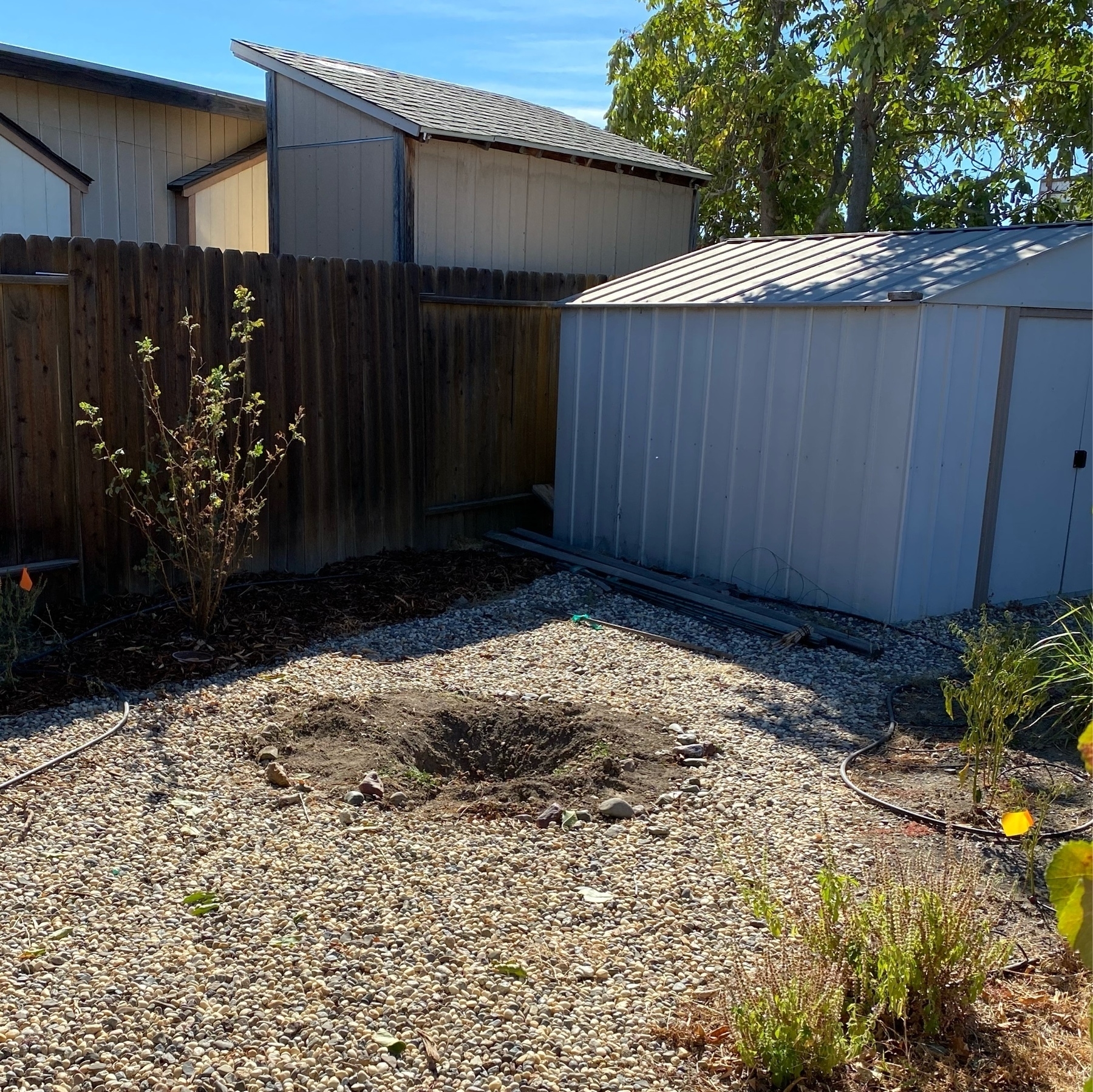
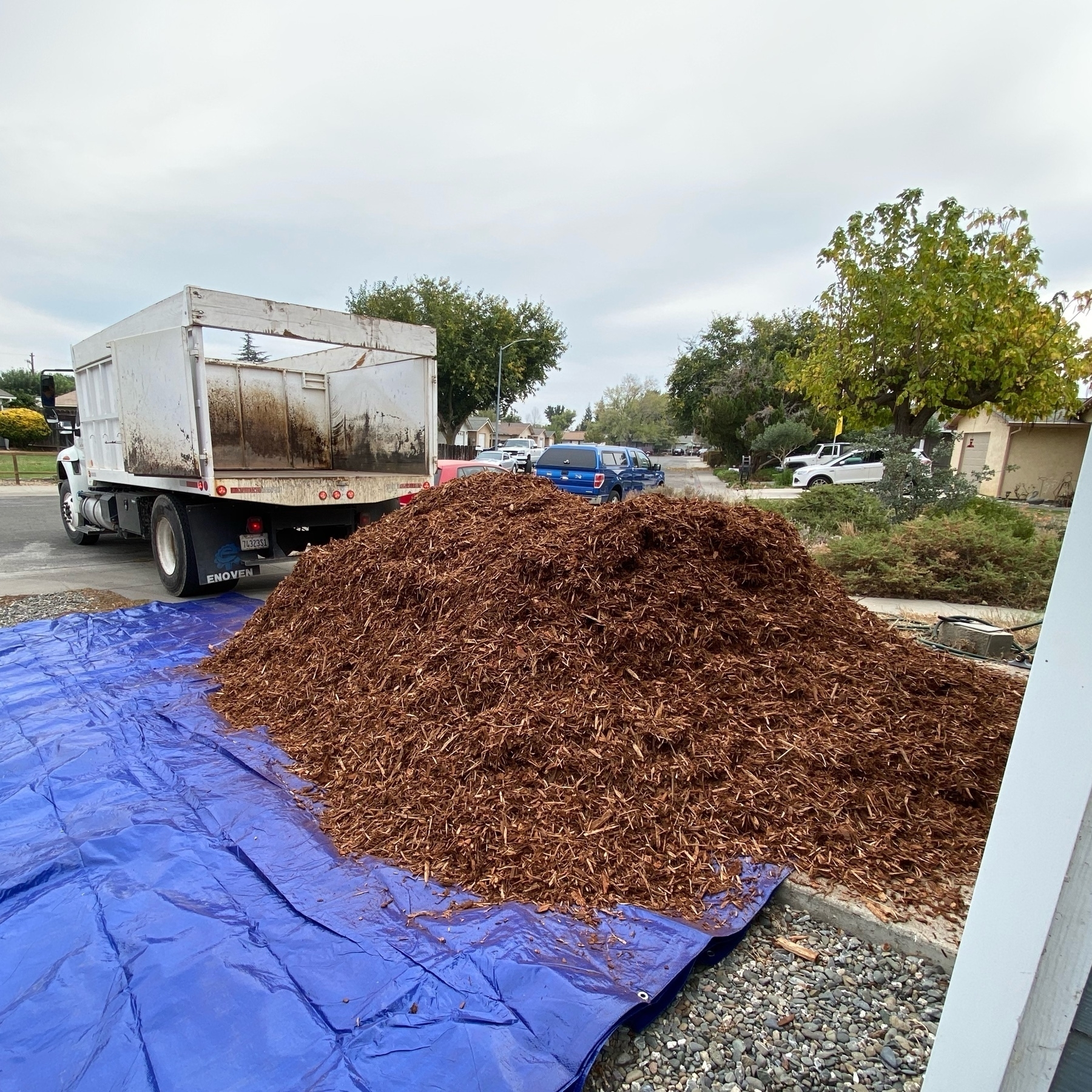
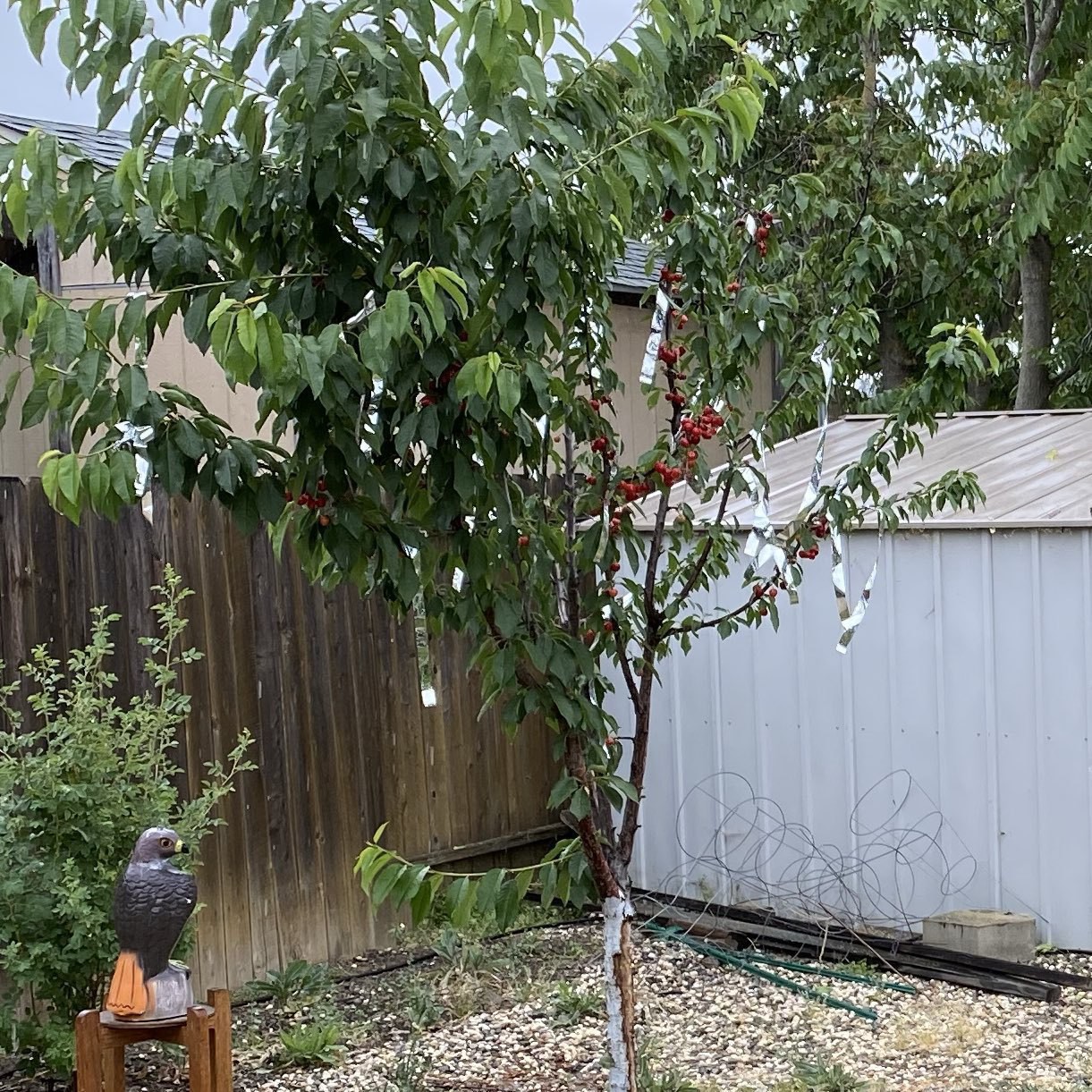
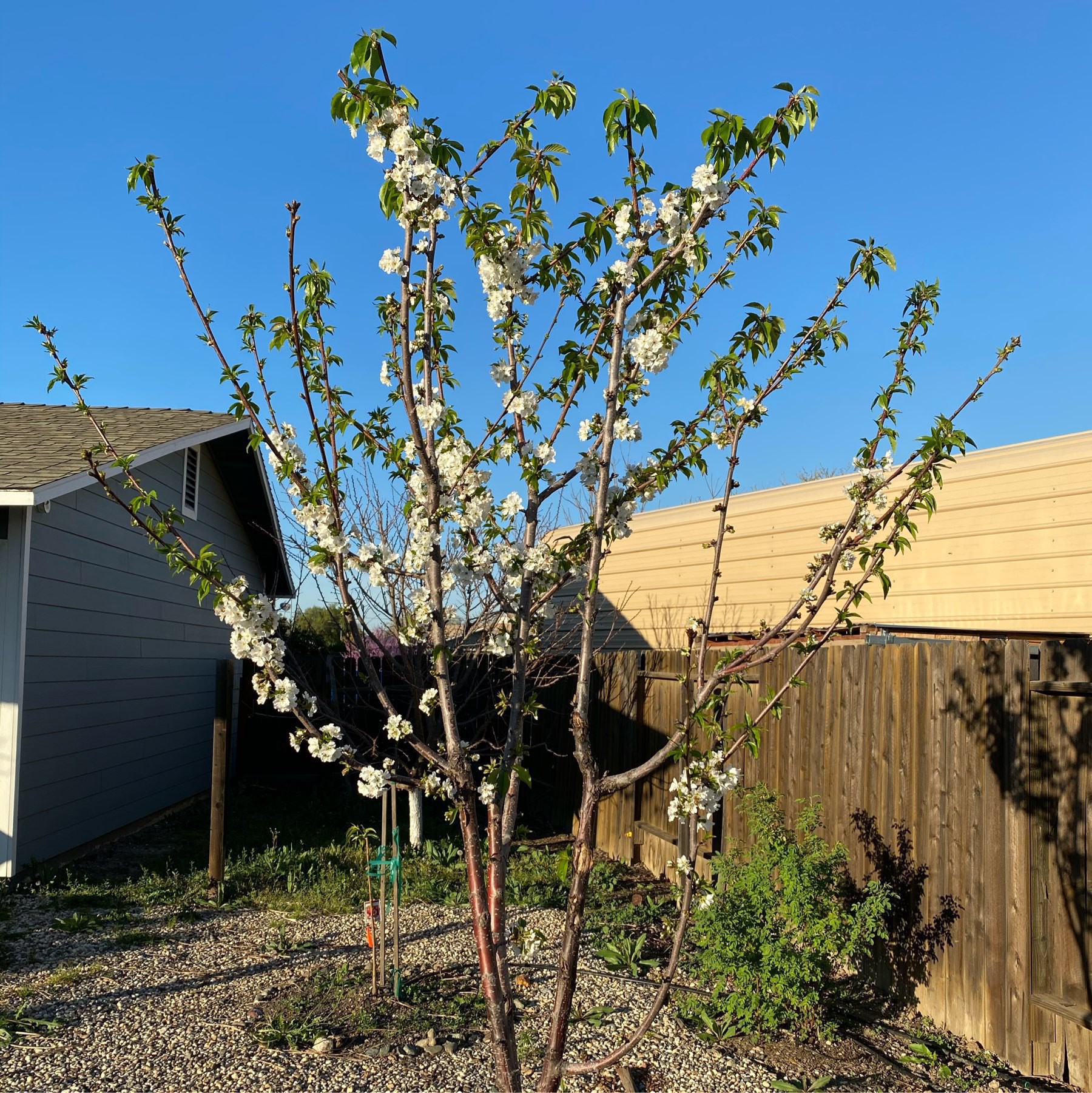
I planted a replacement Lapins Cherry today. Bought it from Stark Bro’s and it has a great unblemished, no prune cut trunk. That is never the case if I buy locally, even from a family operated nursery. As planted, it’s a 42” tall stick. It’ll develop branches next spring. I finally got to use our homemade compost that’s been over a year in the making!
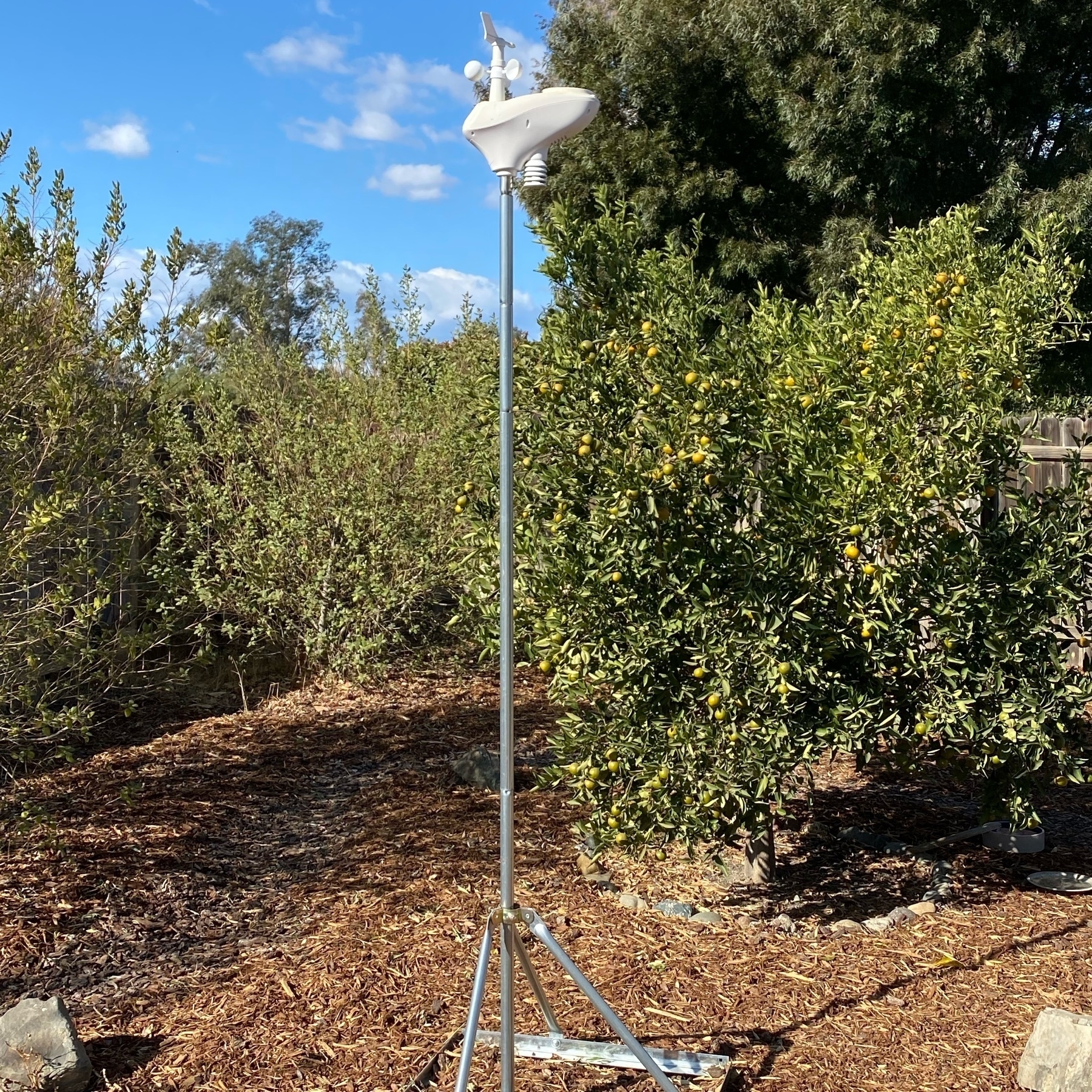
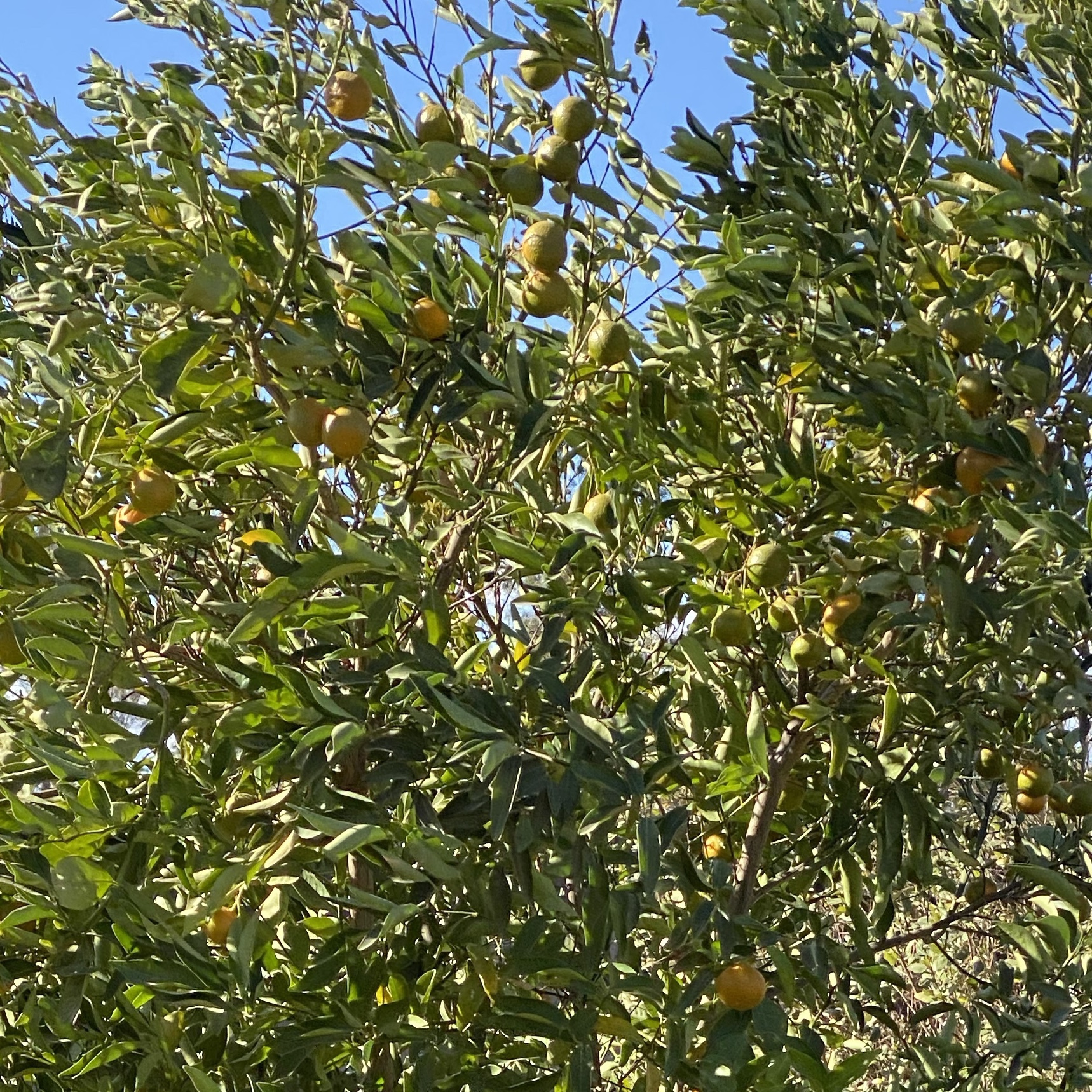
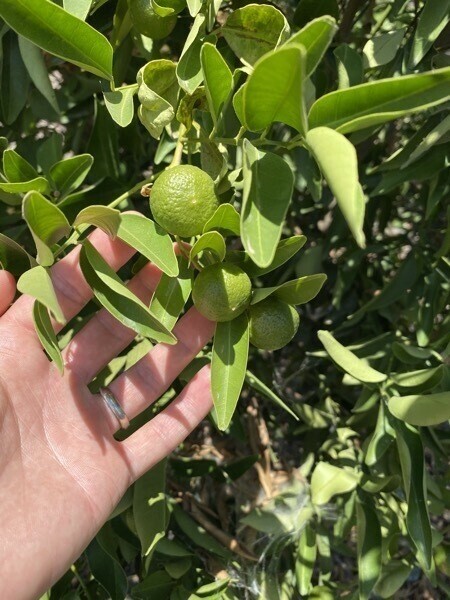
The rainy season in California is right around the corner, so I just cleaned the rain gage & other weather station components of summer’s dust and ash. Meanwhile, the mandarins are slowly ripening.
Tore out the bark beetle infested Lapins Cherry today. It was half dead by beetles girdling it. In November we’ll put in a new Lapins Cherry from Stark Bros.. The old tree was from a big box store and while it provided prodigious fruit it was oddly pruned and I couldn’t fix it.
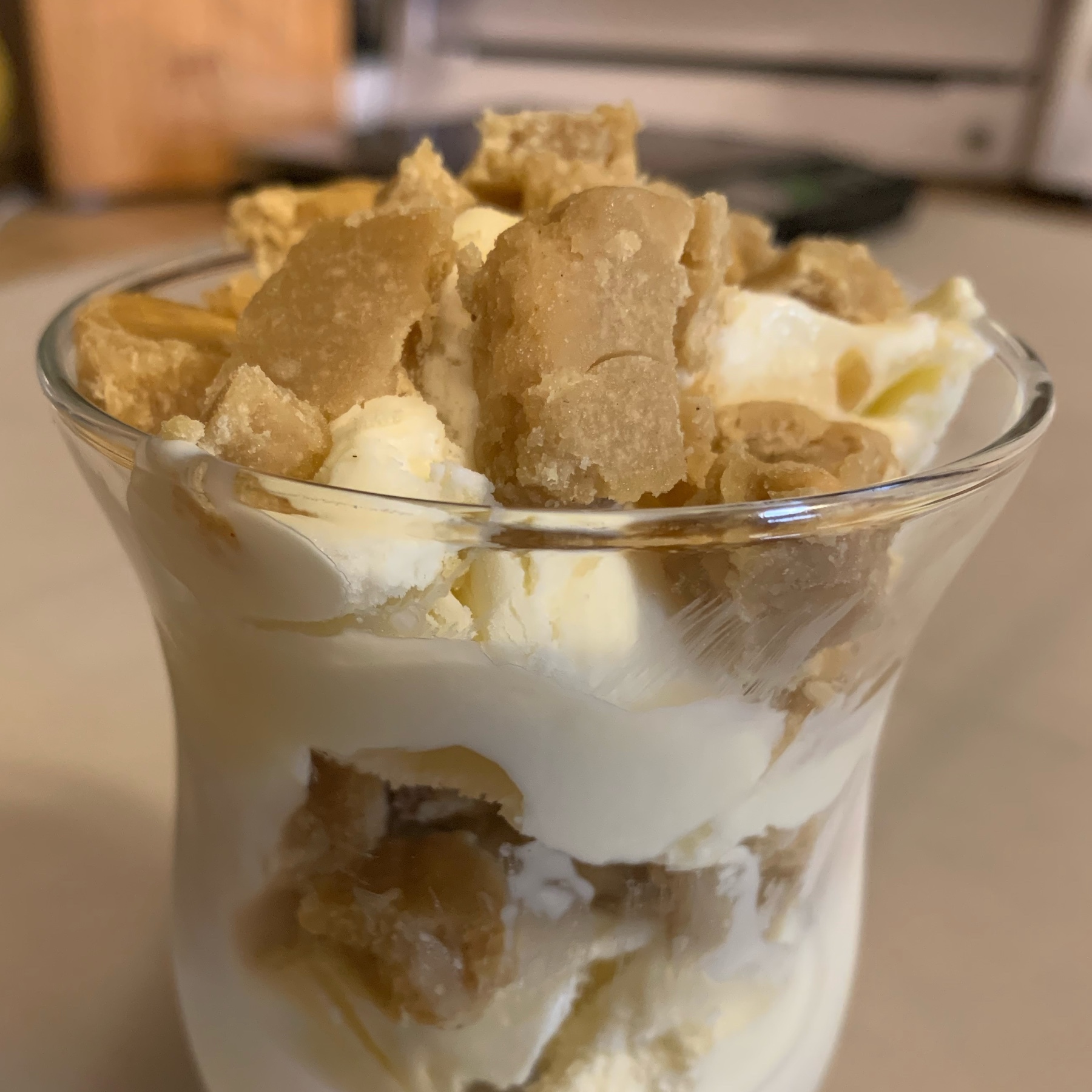
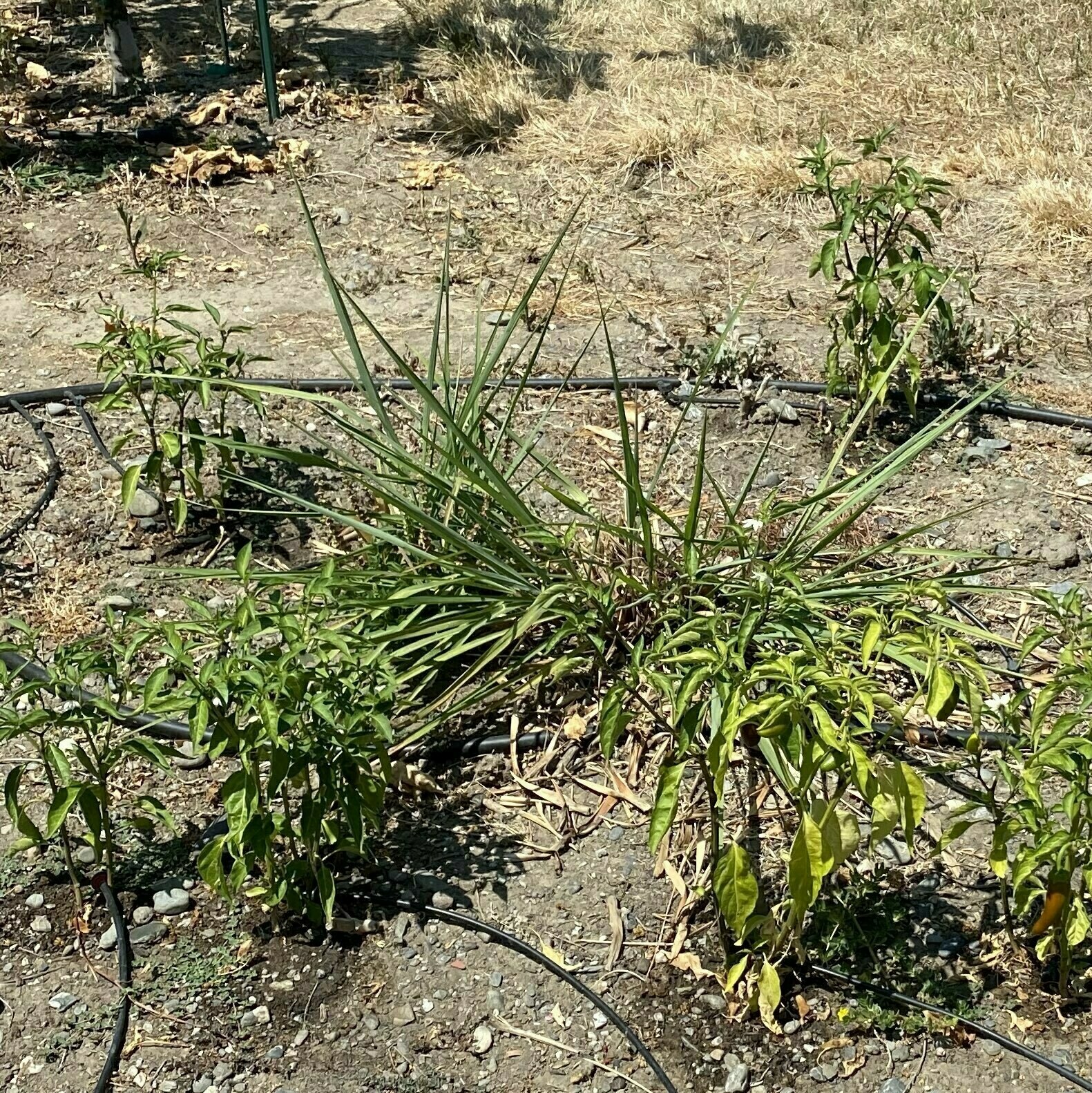
Lemongrass came back this year after dying back over winter (we also took cuttings over winter and one managed to take). So here’s homemade lemongrass ice cream topped with praline. 😋
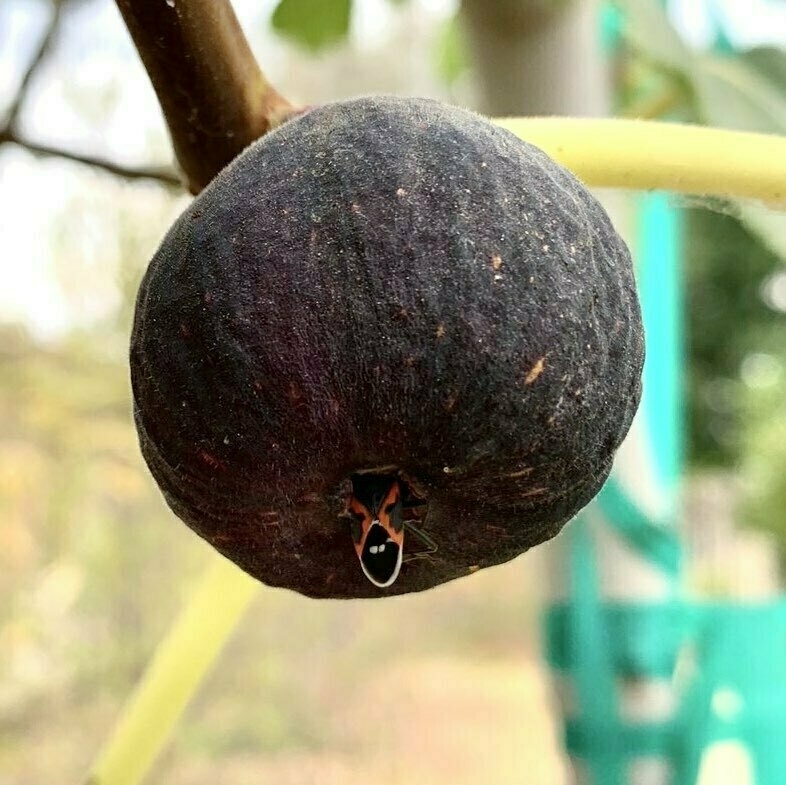
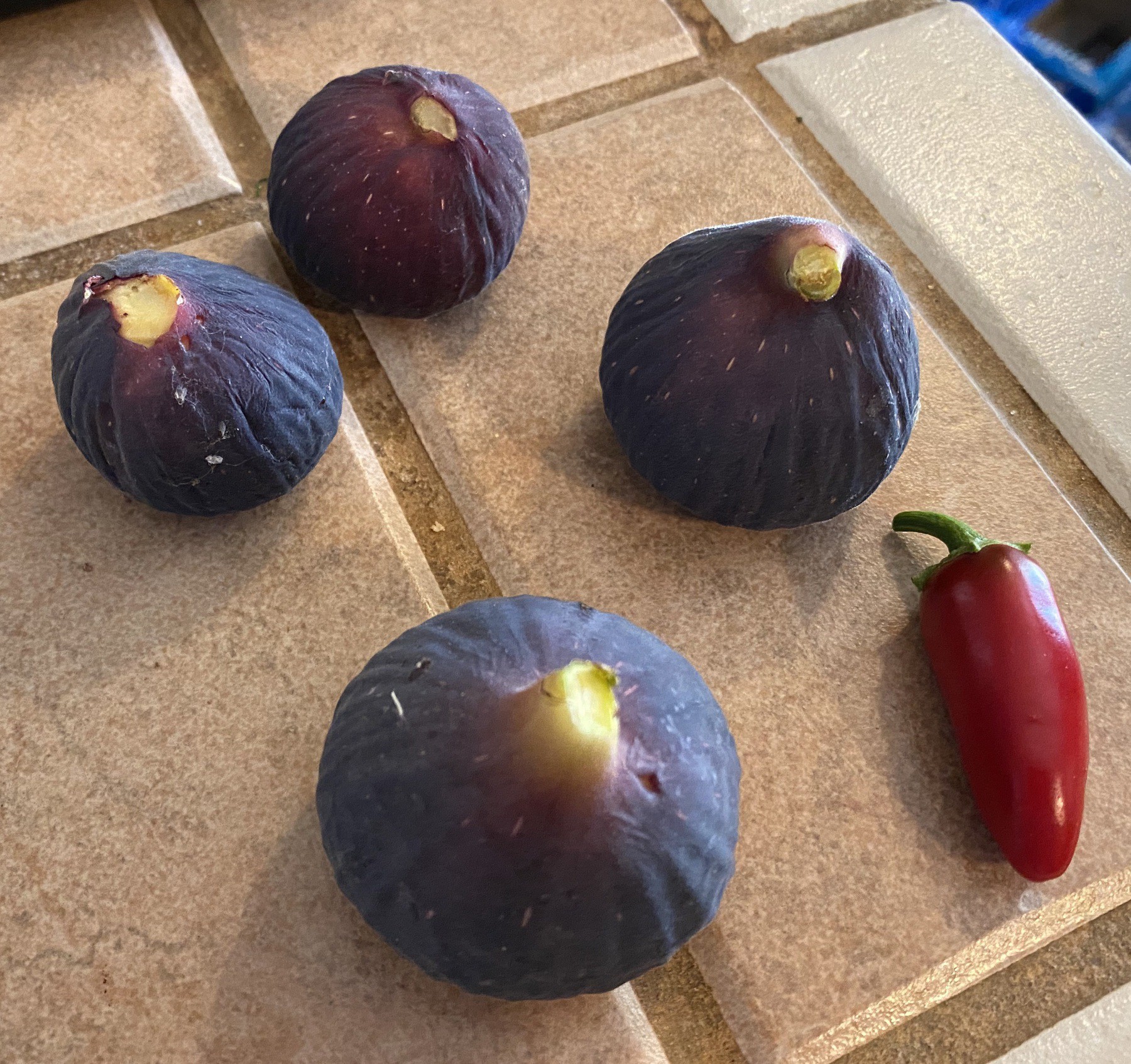
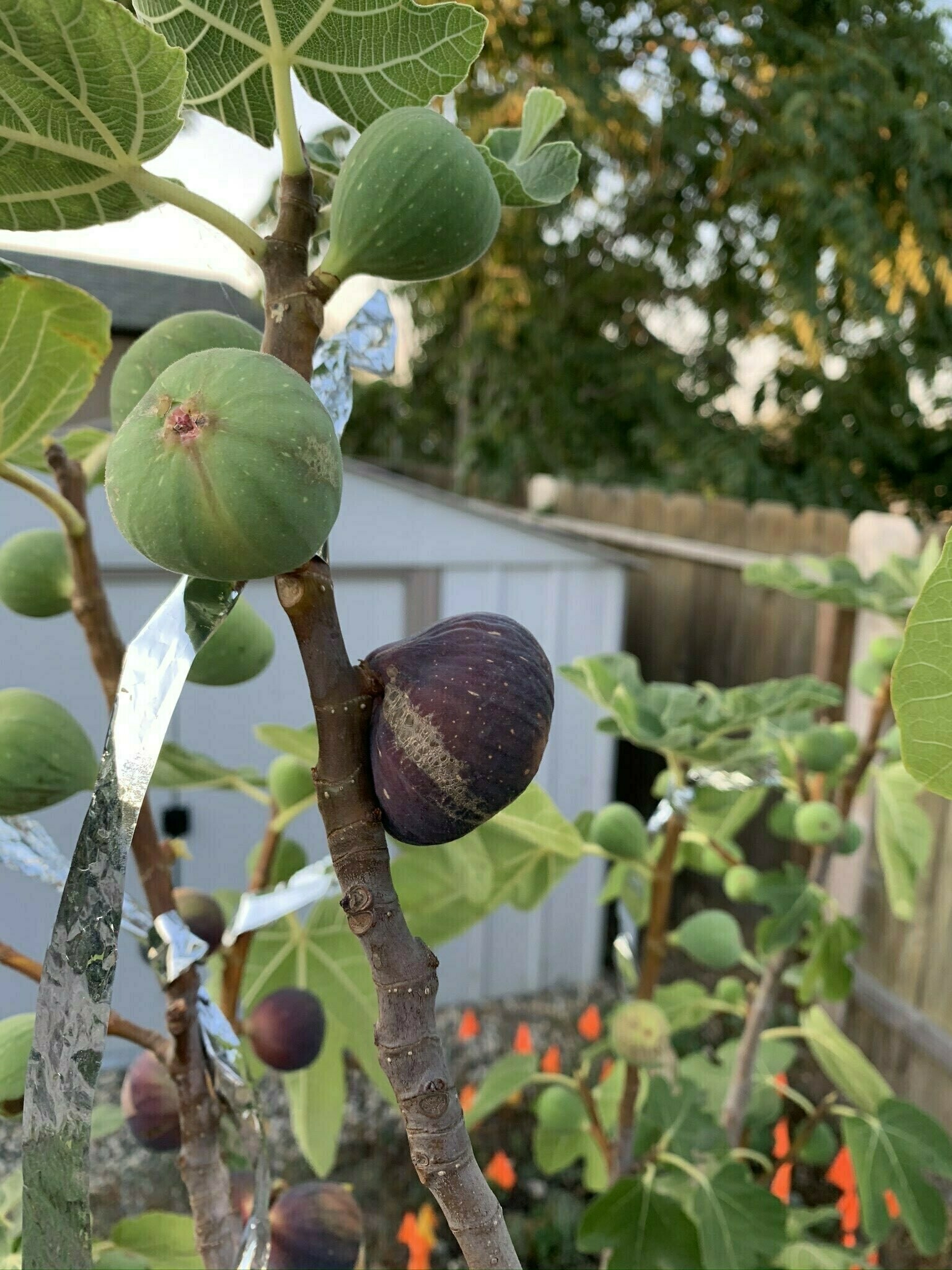
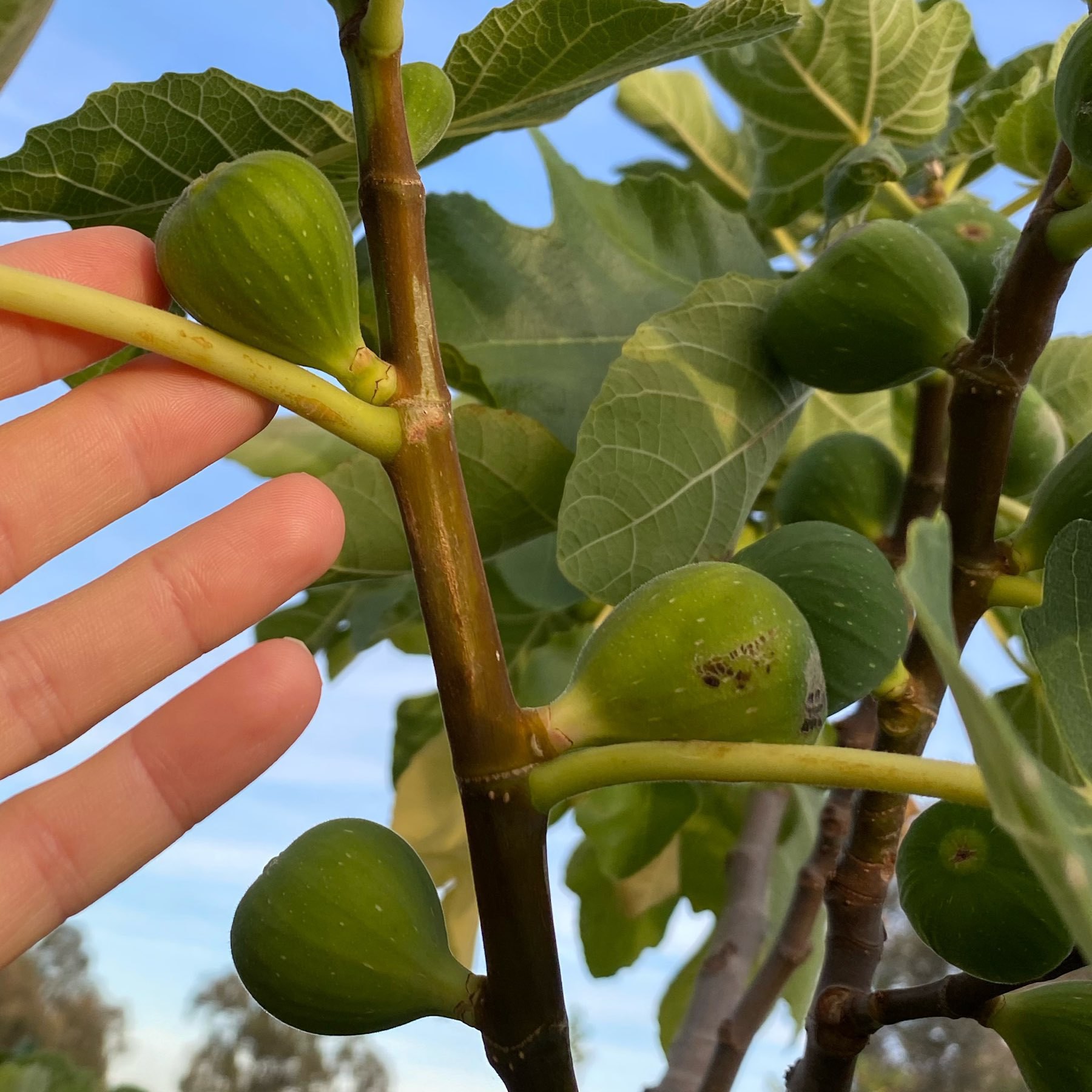
This western milkweed bug stuffing itself into the eye of the Brown Turkey Fig is decidedly not cuddly and I do not like them ruining my figs! We actually cut into a fig the other day, decapitating a milkweed bug that got inside.
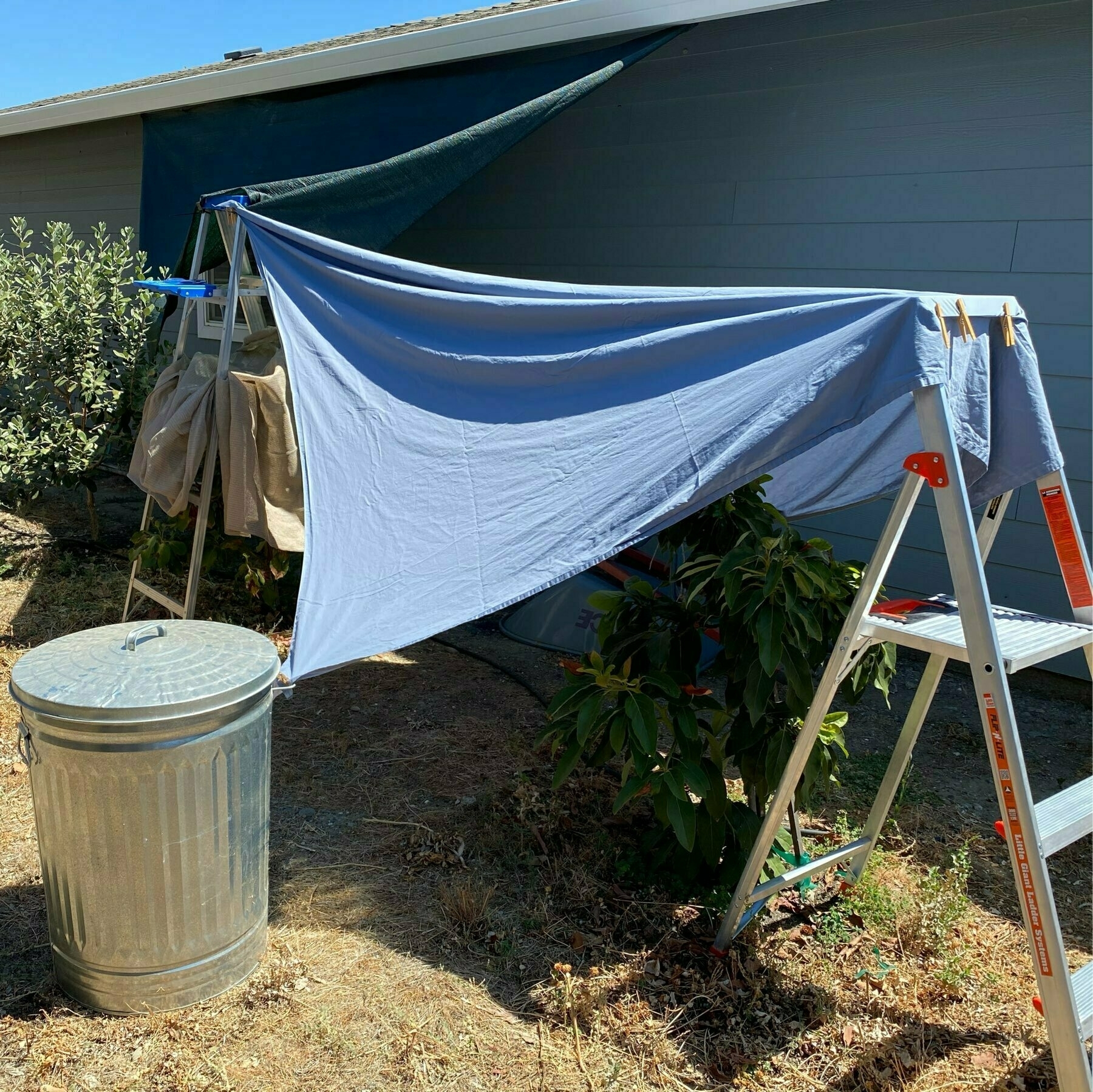
With the incoming heatwave in California, we will filter out direct sunlight to help keep these little avocado trees from scorching to death. Also: save the U.S. Postal Service. ✉️
This year, our Mandarin orange will provide plenty to eat in January. We’re lucky it’s not alternate bearing (this year, anyway).
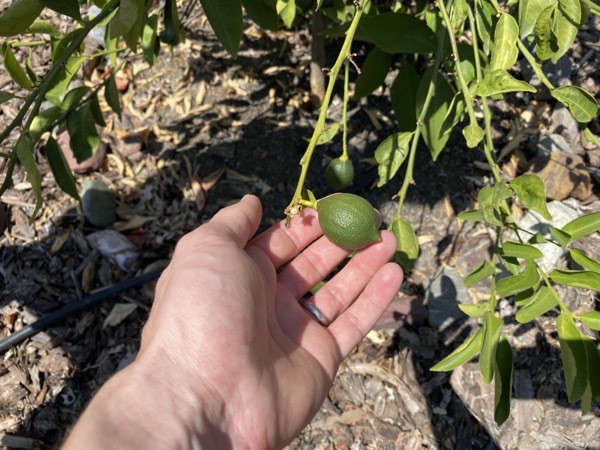
Meanwhile, this is the first year our Meyer lemon has produced more than a couple fruit. Super exciting! It did lose a lot of leaves earlier this summer, though. I attribute that to overwatering. Oops.
Finally, our Valencia is also producing more than a couple fruit:
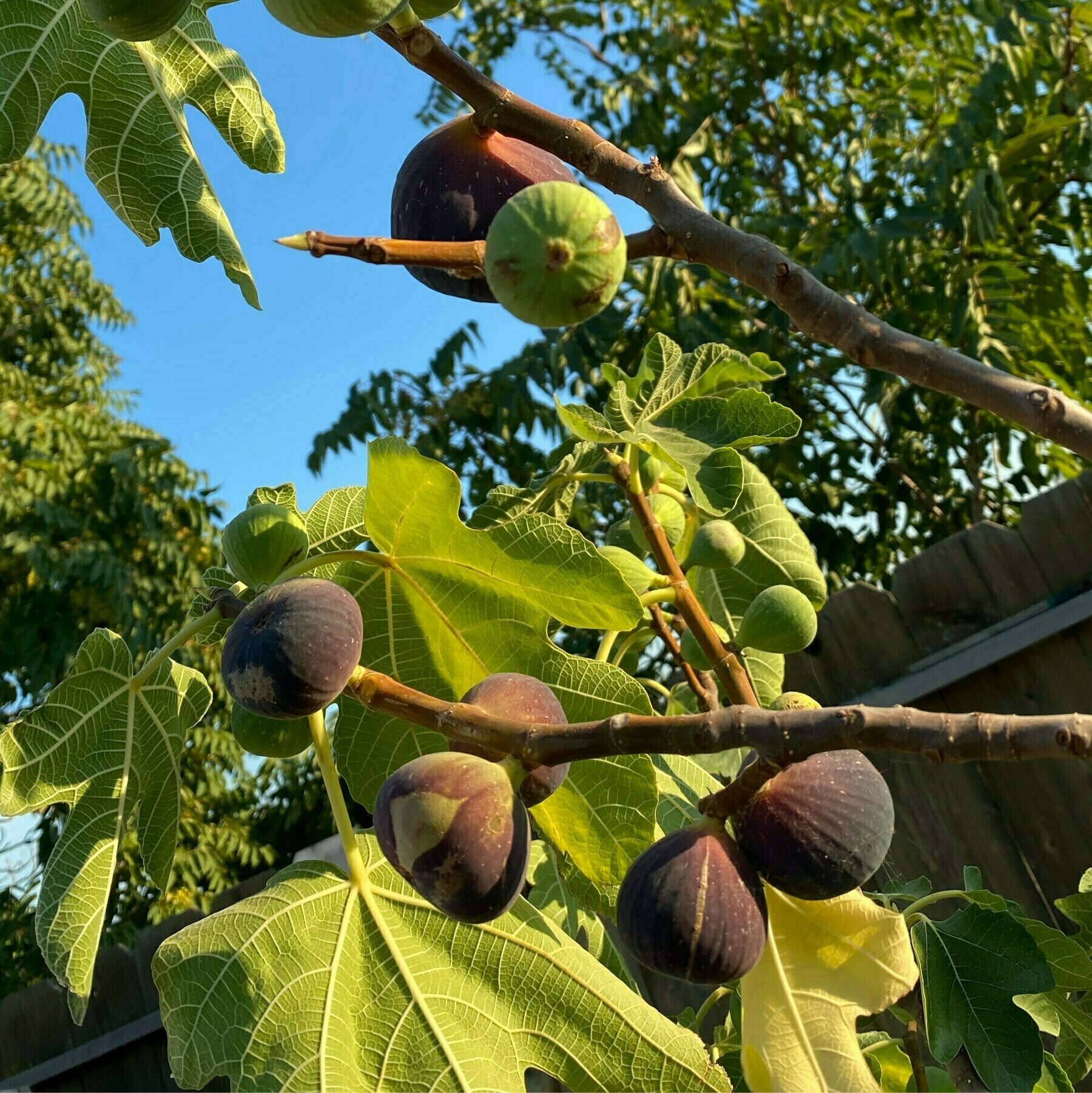
Here’s a drooping Brown Turkey fig — means it’s perfectly sweet & tender for eating. Don’t wait too long after a Brown Turkey fig reaches this stage else it may start to ferment and/or critters will get to it first.
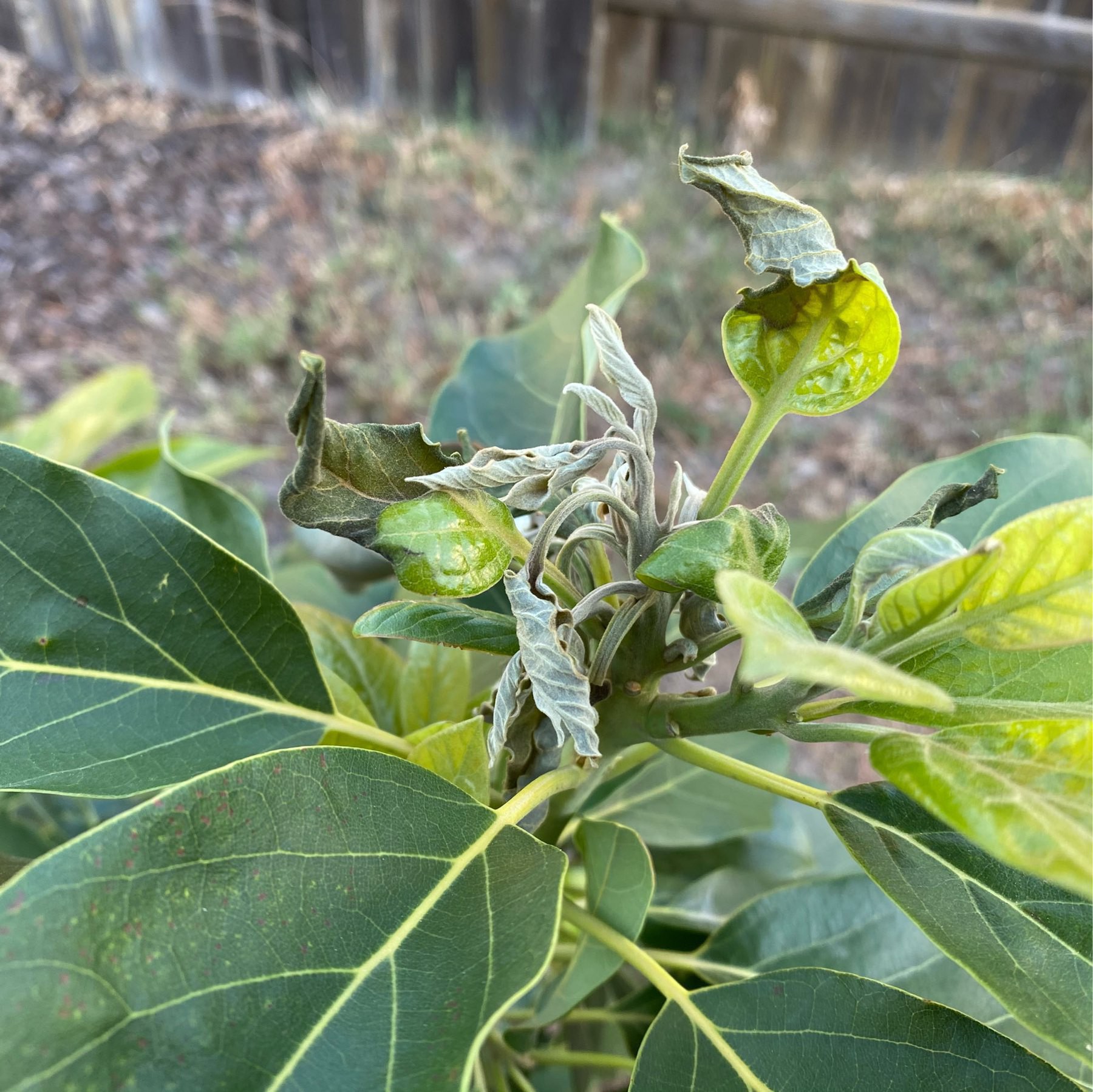
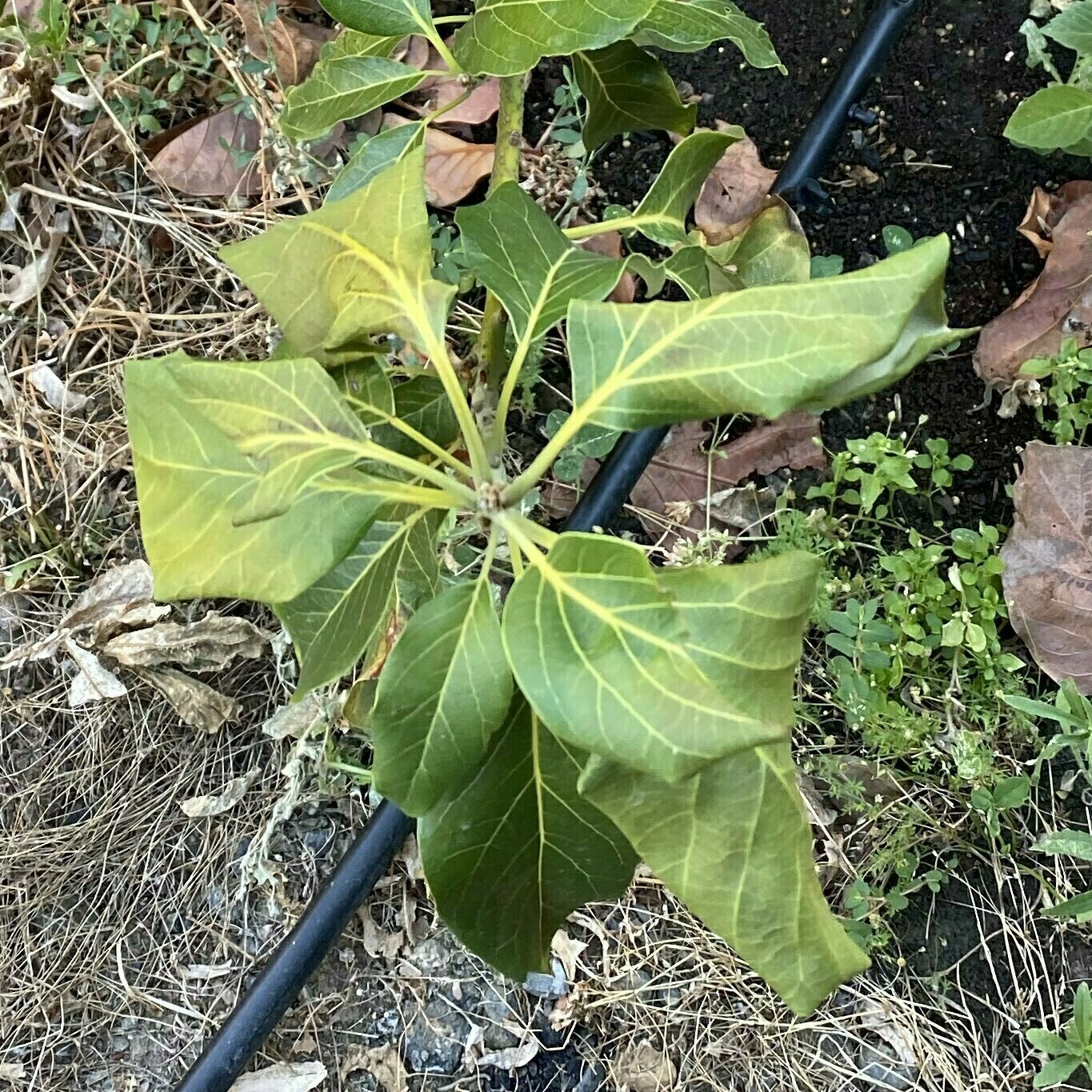
110°F yesterday and today. The avocados we planted 2-3 years ago transpire water more than they can replenish from the ground and so their leaves desiccate and die. Especially the young leaves on the Bacon (1) variety and random adult leaves on the Mexicola (2) variety. ☹️
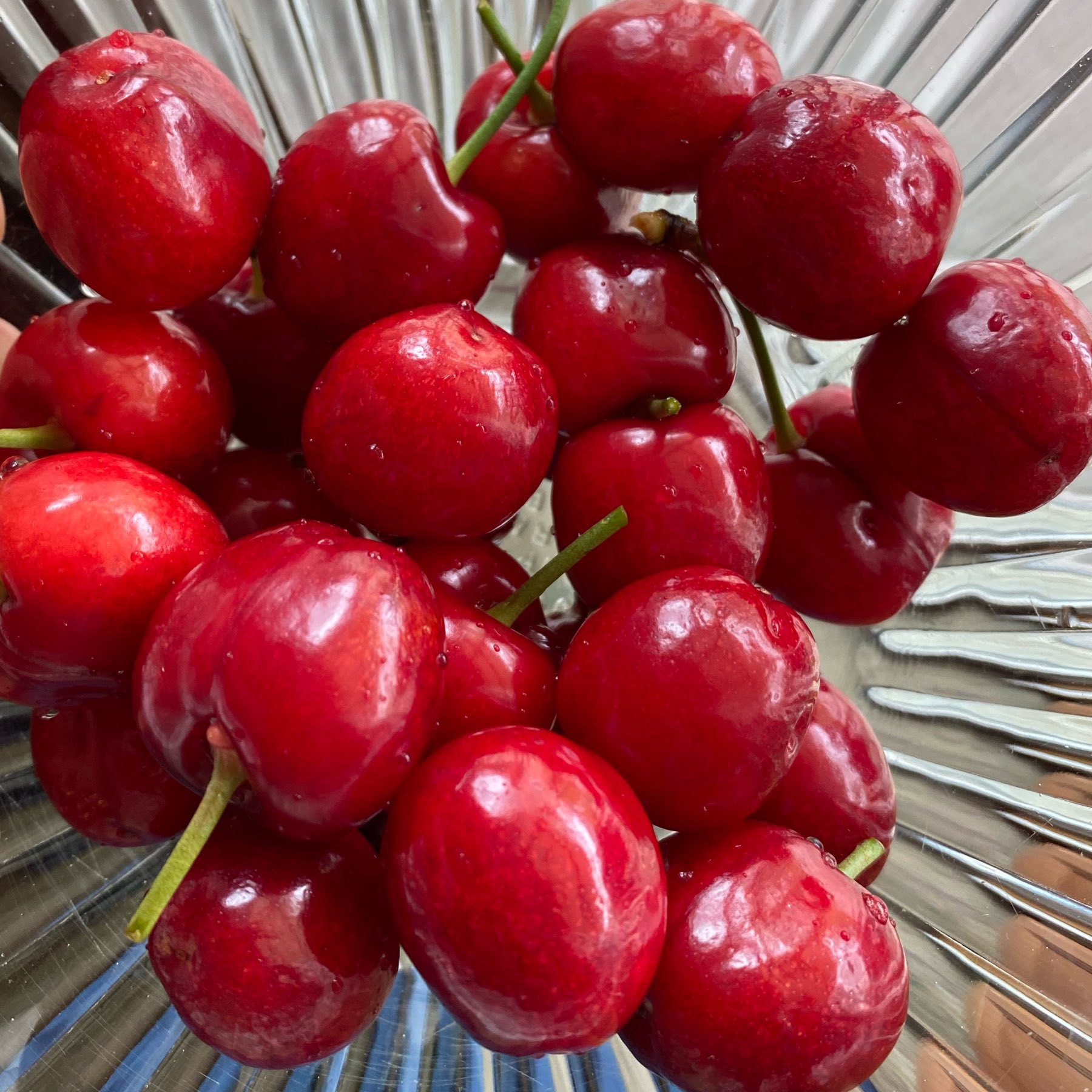
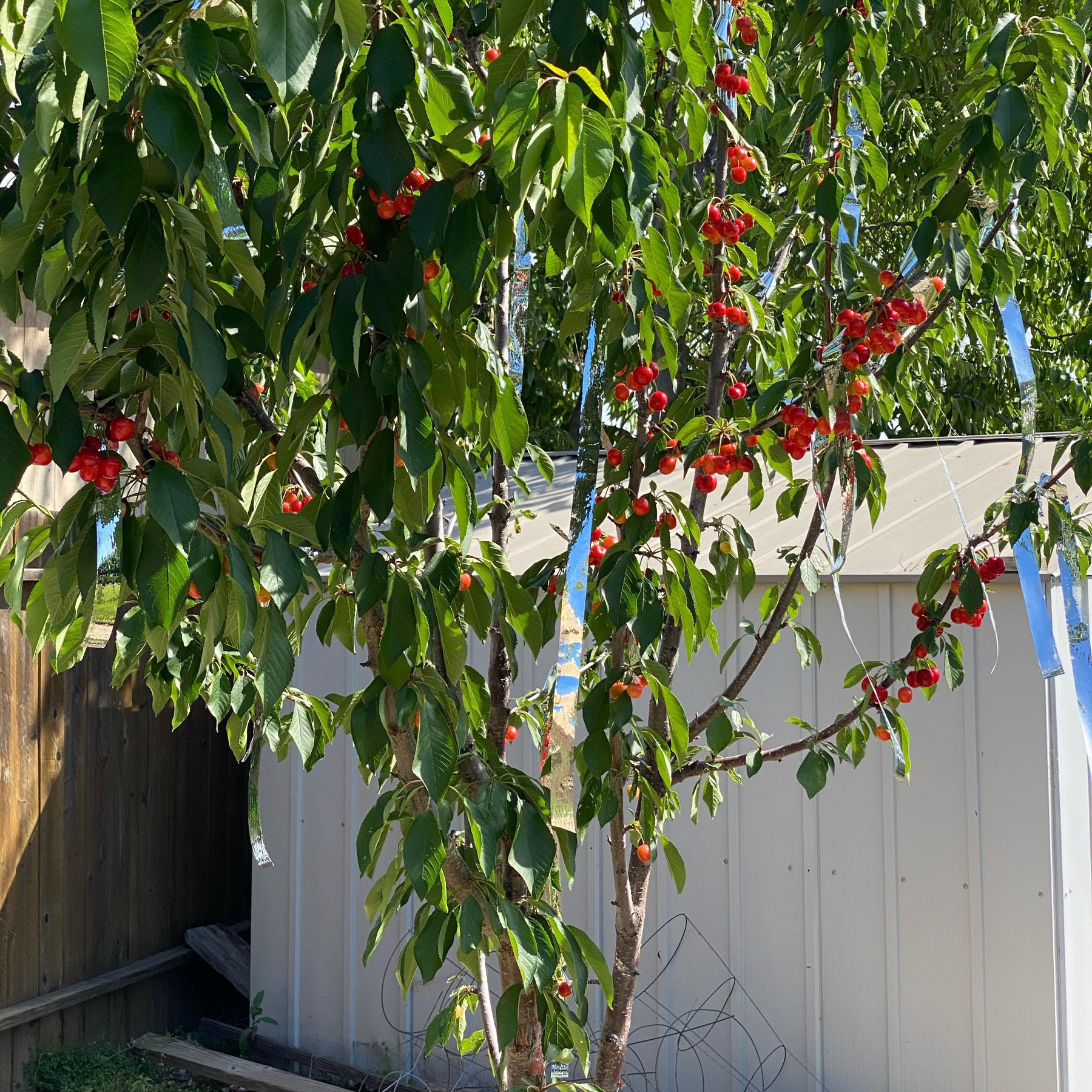
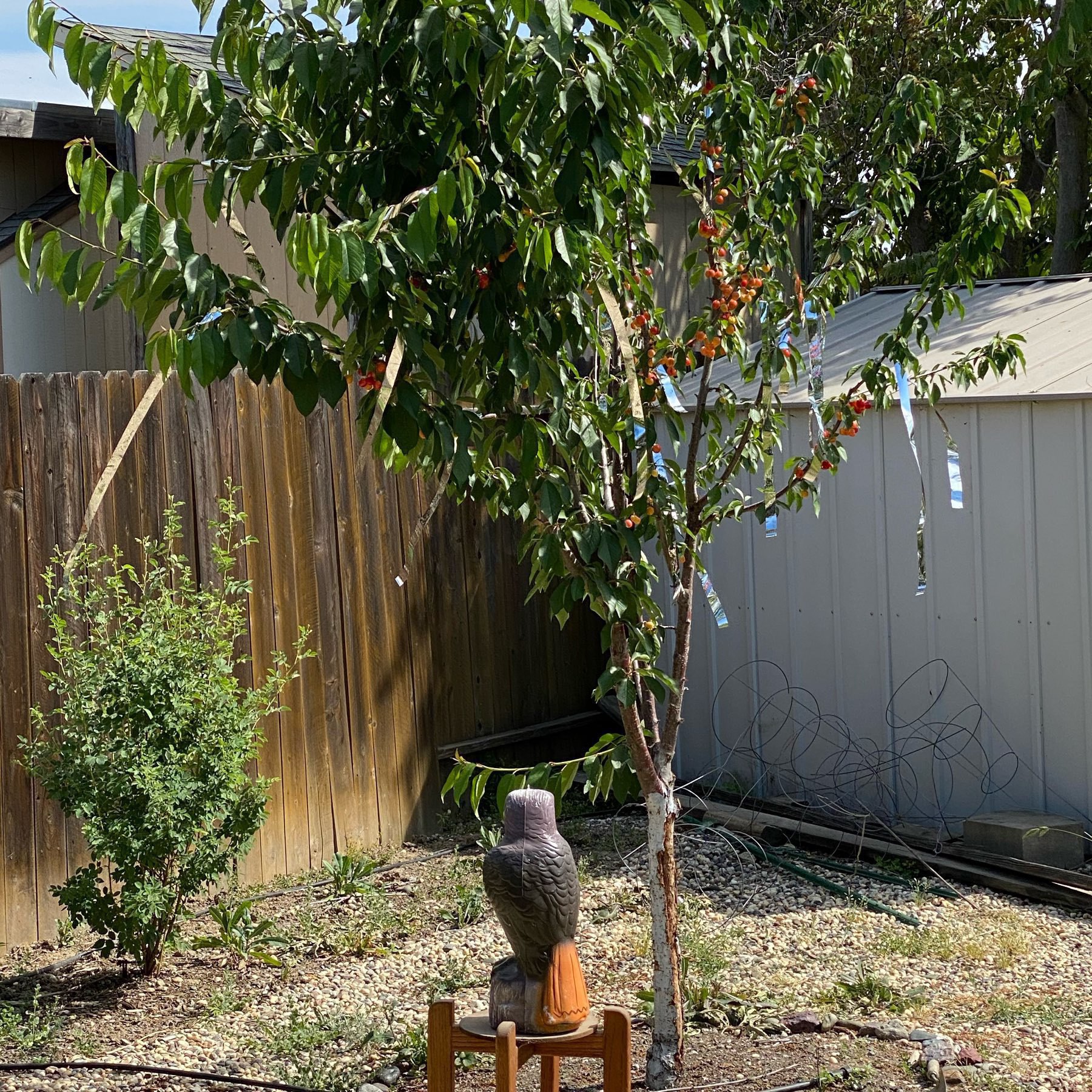
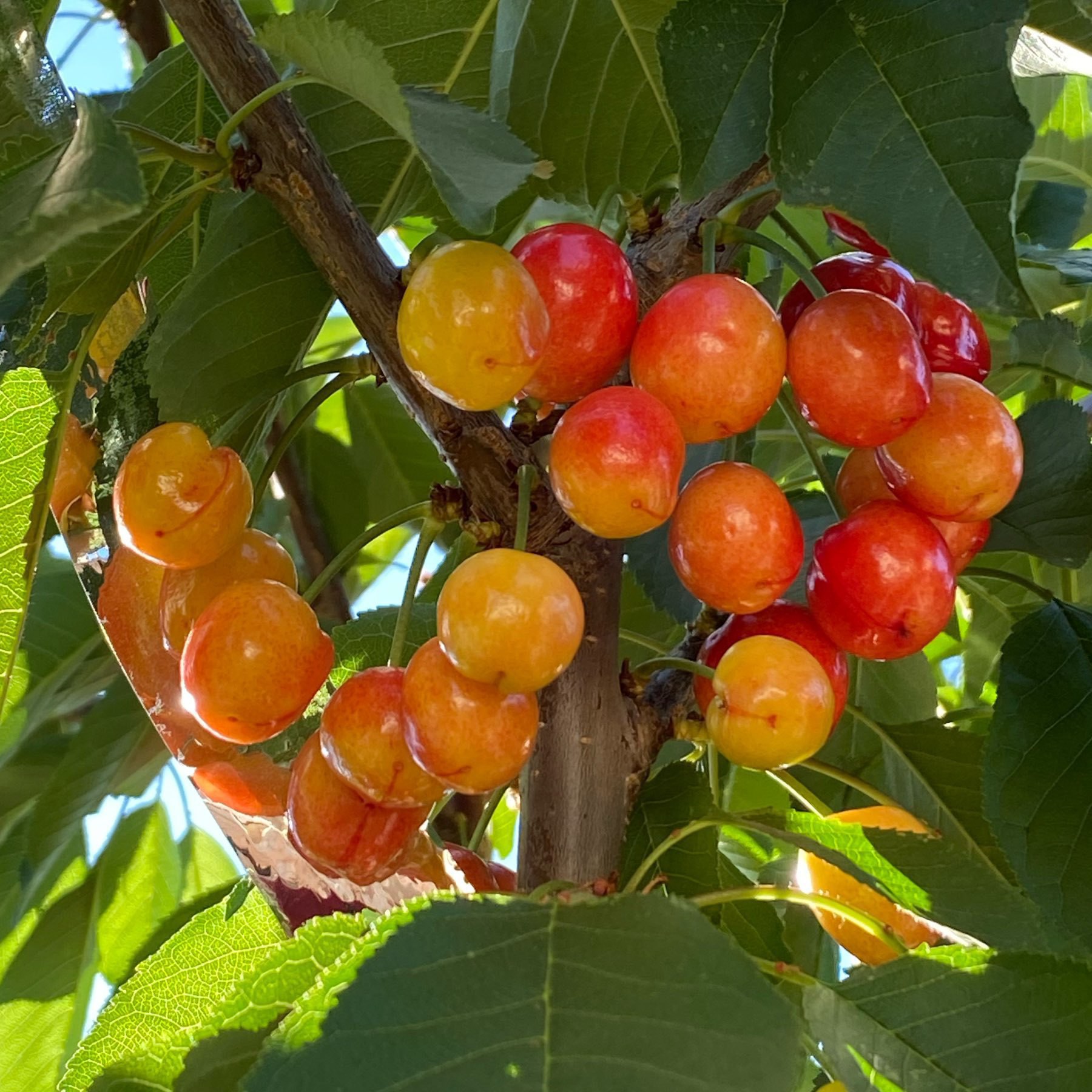
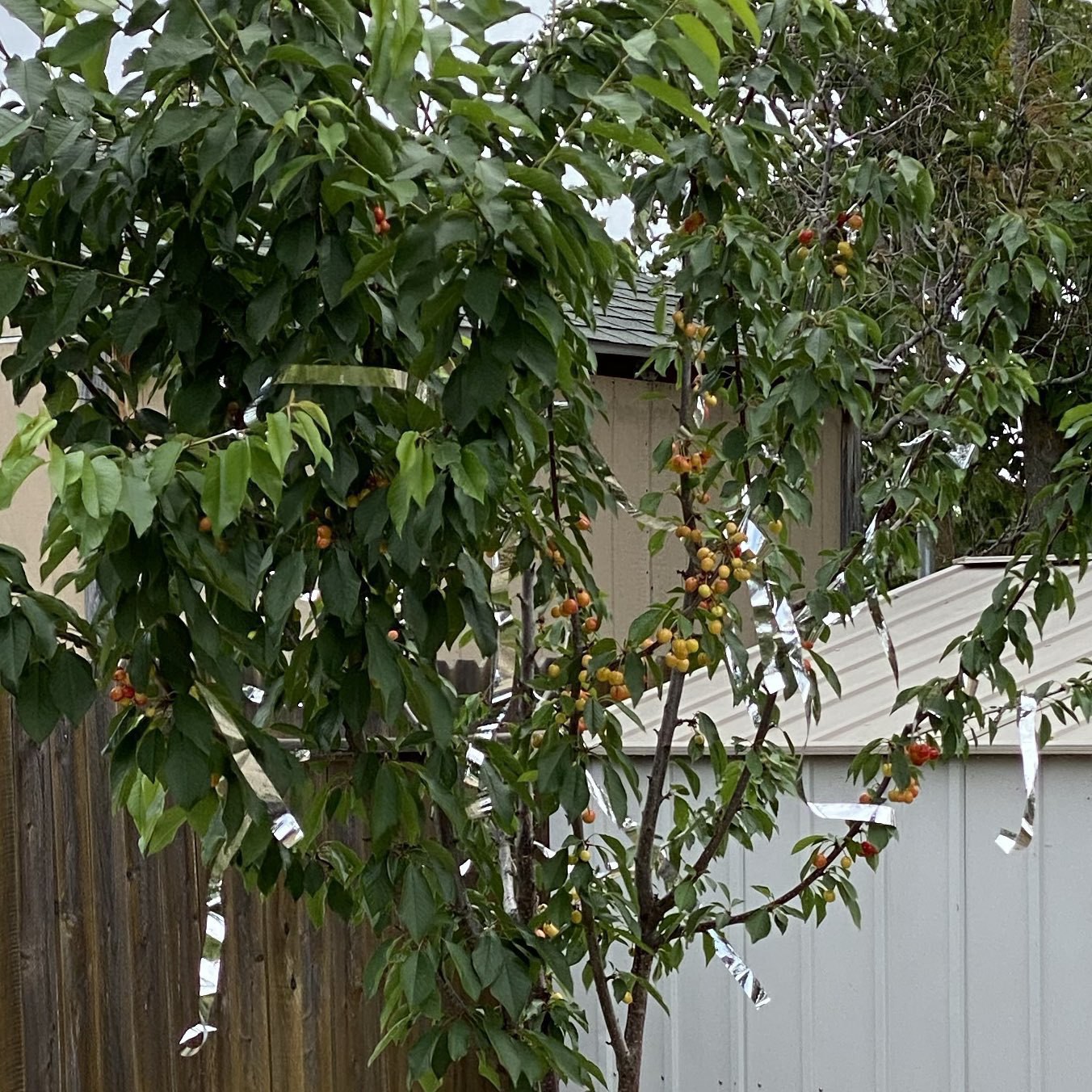
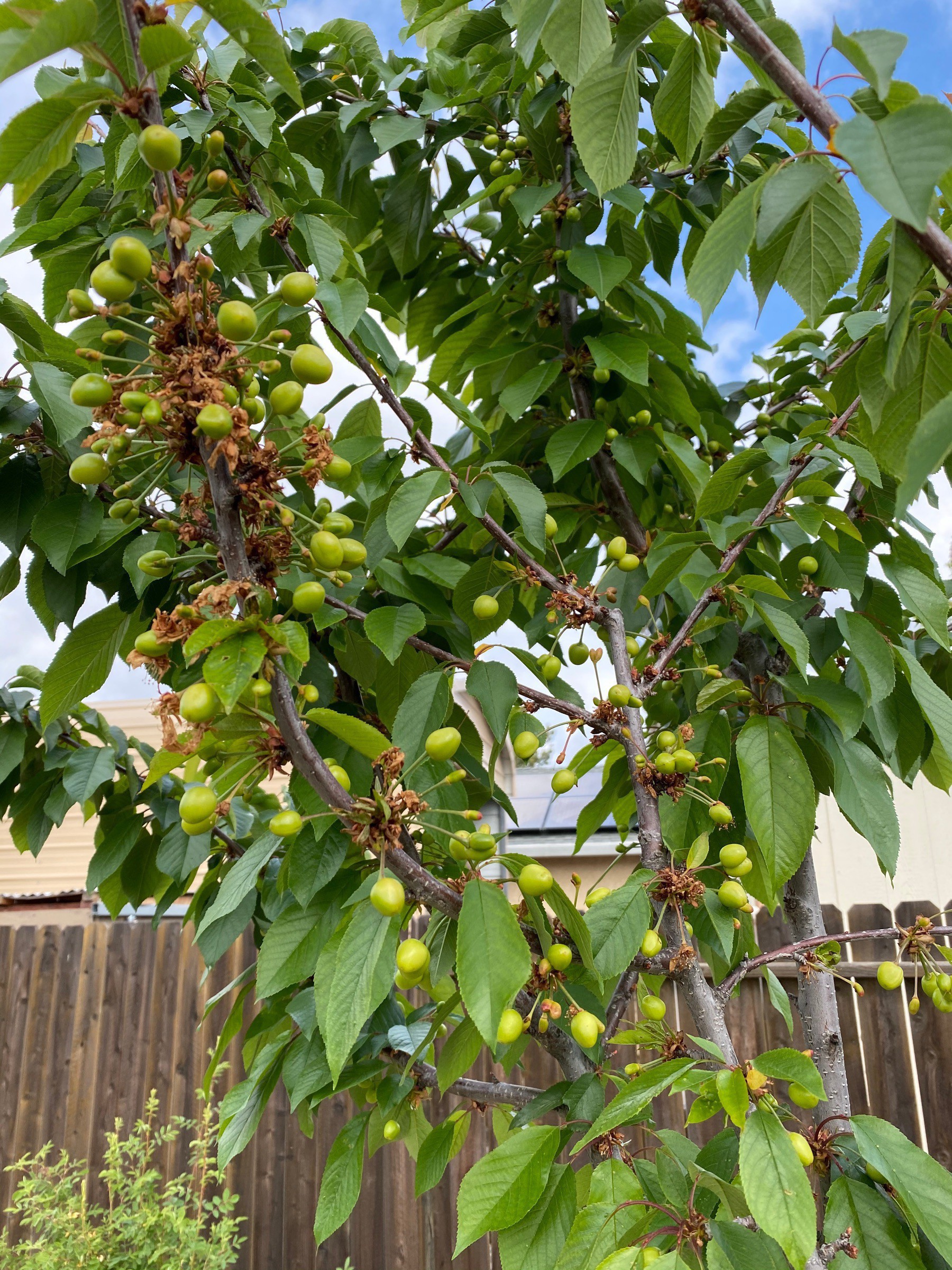
Cherry tree update: almost dark red! (and then they’re hopefully ripe and sweet; had two today and they were not there yet: tasted like early season supermarket cherries.)
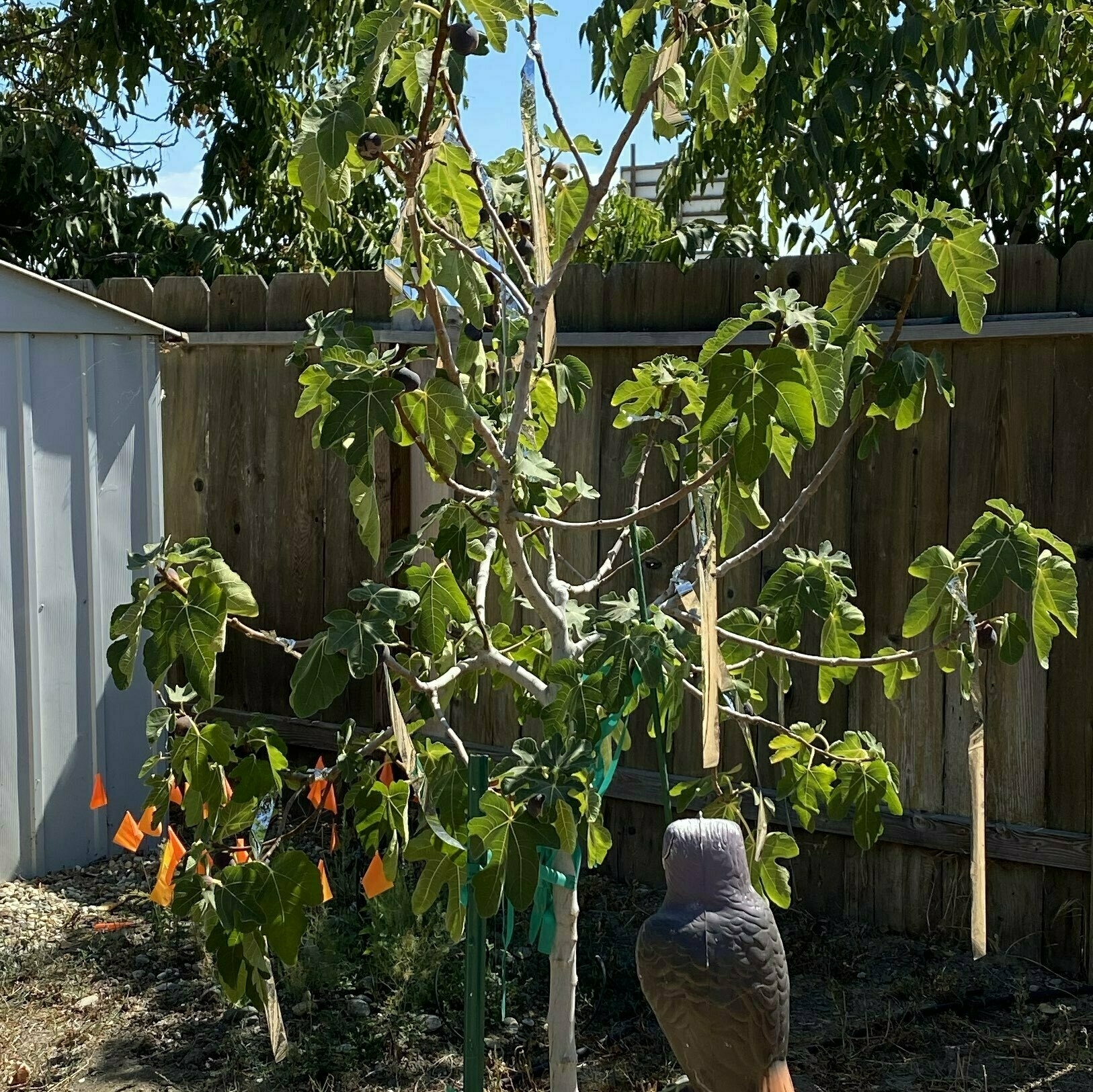
Metallic flagging and a fake hawk to discourage birds from the cherries. The blue jays are smart and eventually don’t care but smaller birds stay away. Just say no to critter killing netting.
Cherries on the bark beetle-caused malnourished, unshaded branches (to right) are blushing fast (May not be very good cherries). The resident blue jays should stick to those branches.... they ignore the metallic tape with malice in their dinosaur eyes...
For several years I’ve watered my fruit trees using a Generation 2 Rachio controller and their irrigation method called “Flex Daily”. This method relies on many variables, a few of which I can only make good guesses at. For example, my soil’s Available Water Capacity from the U.S. Soil Survey. Flex Daily on Rachio is really designed for watering lawns, and I don’t care about lawns. I water fruit trees with unevenly spaced emitters. So the other advanced zone variable that’s not easy to determine due to my needs is the Nozzle In/Hr setting.
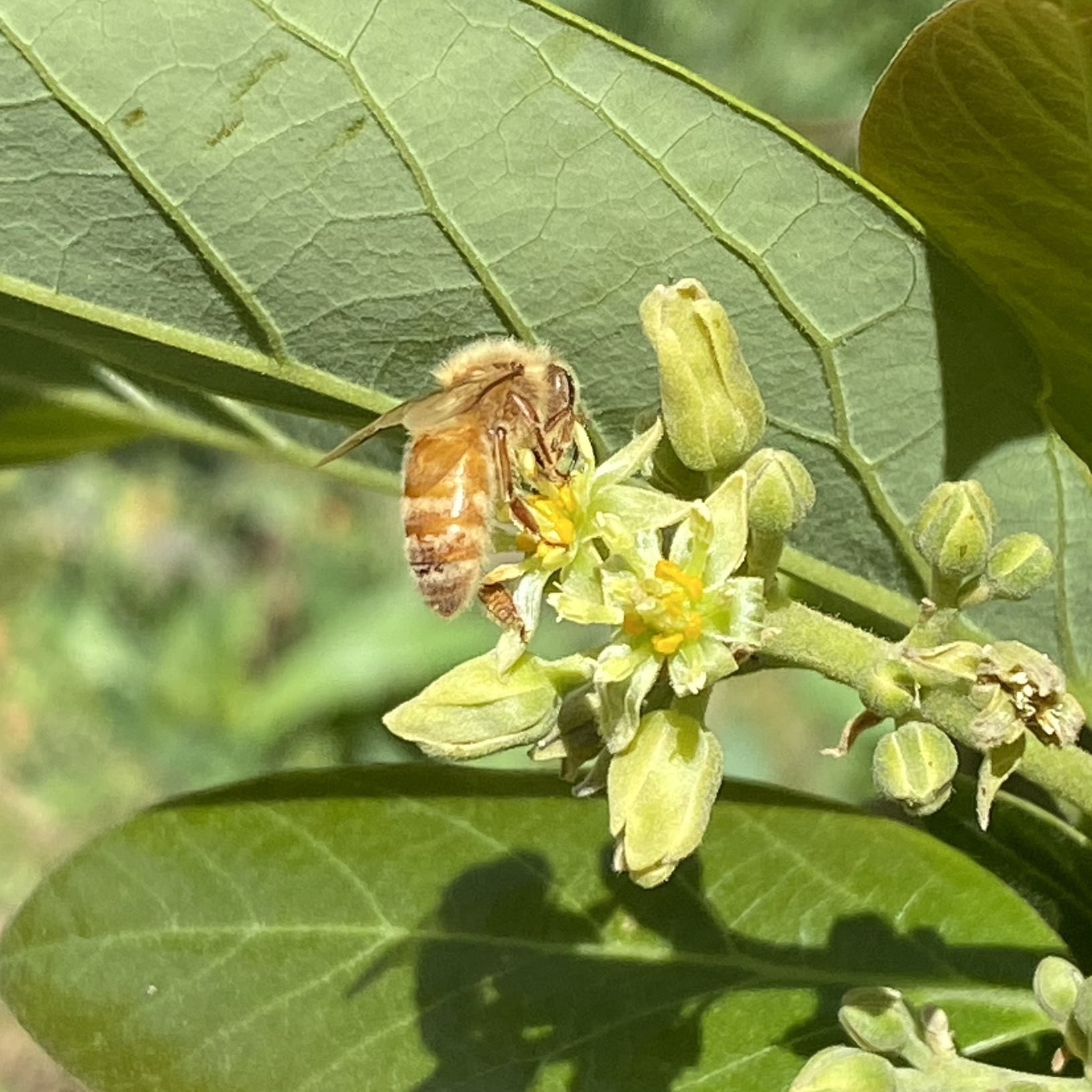
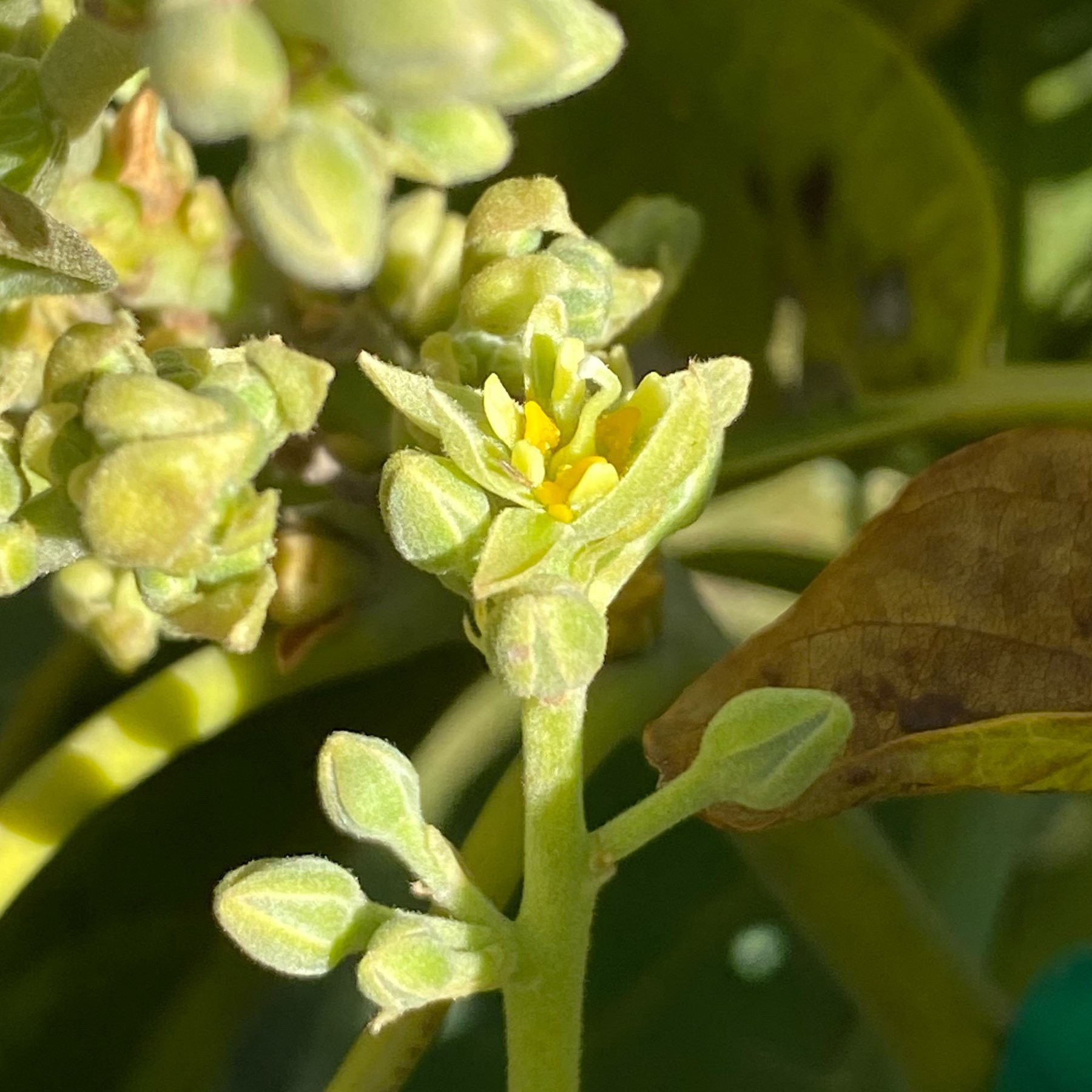
Got to pay attention to notice avocado flowers. Our “Bacon” Avocado tree is flowering. Our “Mexicola” variety is not— too bad because they’re type A and B so would have pollinated each other.
Think we might get cherries in mid to late May! A few tree branches have extremely undersized leaves because of bark beetle damage starving the branches of resources. Mainly from metallic bark beetles. Two branches completely died last year so they got lopped.